
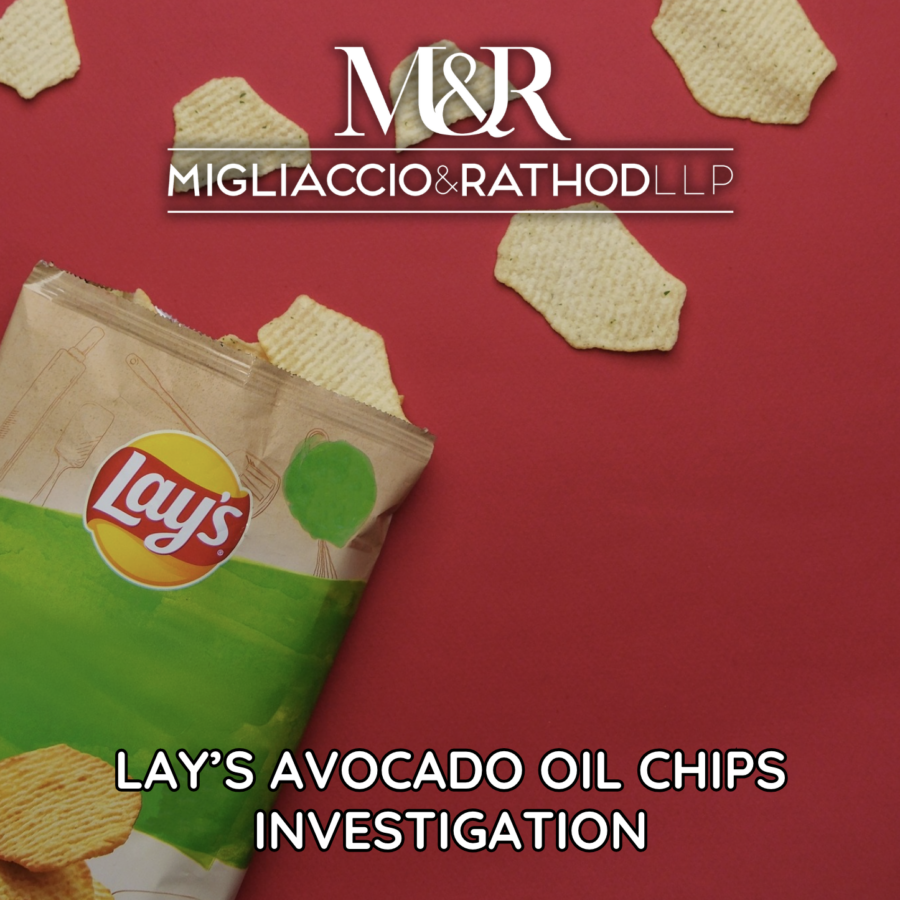
Migliaccio & Rathod LLP is investigating whether consumers who purchased Lay’s potato chips marketed as made with avocado oil received products containing oil that was inconsistent with authentic avocado oil.
Lay’s has introduced avocado oil into certain potato-chip products as part of changes to its product lineup. For consumers who specifically seek foods made with avocado oil—or who seek to avoid other vegetable oils—the type of cooking oil used can be an important factor in deciding which chips to purchase.
A 2026 study conducted by researchers at the University of California, Davis tested 54 processed foods that identified avocado oil as their only oil ingredient. Researchers found that 48 of the 54 products tested—89%—had oil compositions inconsistent with authentic avocado oil.
The results were particularly striking for chips. Researchers tested 28 avocado-oil-labeled chip samples and found that 26 of the 28 samples, or 93%, failed the researchers’ authenticity criteria.
Lay’s was among the nationally recognized brands included in the testing.
Why Consumers May Have Been Misled
Consumers may pay more for chips advertised as being made with avocado oil because they believe they are purchasing a different product from conventional chips made with other vegetable oils.
Representations concerning avocado oil may be particularly important to consumers who:
- intentionally seek products made with avocado oil;
- attempt to avoid other vegetable or seed oils;
- associate avocado oil with particular nutritional or dietary preferences; or
- are willing to pay a premium for products advertised as using avocado oil.
If Lay’s products were represented as being made with avocado oil while laboratory testing found an oil composition inconsistent with authentic avocado oil, consumers may not have received the product they reasonably expected based on the labeling.
UC Davis Avocado Oil Testing
UC Davis researchers analyzed fatty acids and sterols, which provide chemical fingerprints that can help distinguish avocado oil from other oils.
Researchers also investigated whether frying itself could explain unusual results. They found that frying caused only minimal changes to the important authenticity markers.
The researchers additionally allowed a 10% margin of deviation to account for natural differences caused by avocado variety, geographic origin, and other variables. Despite that allowance, 89% of the avocado-oil processed foods tested still failed the authenticity criteria.
The study does not necessarily establish that food manufacturers knowingly substituted another oil. UC Davis researchers noted that adulteration could occur farther upstream in the supply chain and that manufacturers may themselves receive adulterated oil from suppliers.
Nevertheless, consumers ultimately may have paid premium prices for products whose oil did not match what they understood the labels to represent.
We Are Interested in Hearing From Consumers Who
- purchased Lay’s chips marketed as made with avocado oil;
- chose the product specifically because it contained avocado oil;
- relied on avocado oil being identified on the package;
- specifically sought to avoid other vegetable or seed oils;
- paid more for the avocado-oil product than conventional Lay’s chips;
- purchased the product repeatedly;
- still have packaging containing a lot number or date code;
- have receipts, photographs, or online purchase records; or
- would have paid less—or not purchased the product—had they known the oil might not be authentic avocado oil.
Product packaging and lot numbers may be particularly helpful in determining whether particular batches were affected.
If you purchased Lay’s chips marketed as made with avocado oil and believe you did not receive what the product’s labeling promised, we would like to hear from you.
Please complete the contact form on this page, send us an email at [email protected], or call us at (202) 470-3520.
Migliaccio & Rathod LLP is a Washington, D.C.-based law firm that represents consumers in class-action litigation nationwide.